
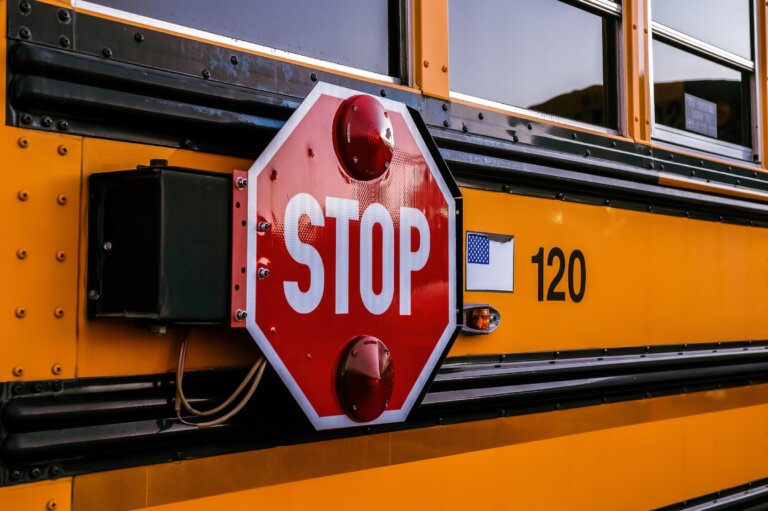
Next week is National School Bus Safety Week. All too often do you hear about a driver getting ticketed for going around a stopped school bus. I am not sure of their reason. I can’t believe that driver’s don’t see the school bus – after all, its big, yellow, has flashing red lights and even its own stop sign. So if seeing the school bus isn’t the problem, it has to be that drivers just don’t care about the potential consequences and choose to ignore the law. This callous and reckless disregard of traffic laws permeates the Staten Island driving culture, from passing a school bus, driving through a red light or not stopping at a stop sign.
Summary
- Frank J. Dito, Jr. argues that many Staten Island drivers blatantly ignore traffic laws, especially by illegally passing stopped school buses despite clear signals and legal requirements. He recounts a firsthand example of a driver flouting rules to avoid waiting at a light, and emphasize the simple mandate to stop in either direction for buses with red lights and stop sign extended. Citing a recent injury to a child when a driver failed to stop, Mr. Dito, Jr. calls for a cultural shift toward compliance and, if needed, harsher penalties to deter violations.
I was driving the other day and was stopped at a red light at the end of Richmond Road and Morley Avenue, waiting to complete my right turn. While I was driving, I had previously noticed a car behind me trying to pass other cars. When I was stopped, I noticed the car pull out from behind me and continue straight, as if to make a left hand turn onto Richmond Road. The light was green in that direction but instead of making a left turn, the car proceeded to make a right turn. Obviously, the traffic laws don’t pertain to that driver. I am sure that the driver simply couldn’t be bothered to wait for the light to turn red and made up their own rules.
As a parent, I take my child to school every morning. I always notice that approaching drivers seem tentative about stopping for the bus. The rules are very simple.
- You must stop – in either direction – when approaching a stopped school bus with its red lights on and its stop sign deployed.
- Its not a judgment call – you must stop.
- If you don’t, the consequences can be severe.
- Severe in that a child could be killed.
Last week, a driver apparently felt that she didn’t have to stop for a school bus and proceeded to drive around the cars that were lawfully stopped. That driver clipped a 9-year old girl getting off the bus, she sustained sever injuries but thankfully she is expected to survive. The driver didn’t have a good excuse for what she had done – was she late for work?
- What if the girl had been killed?
- What if that was your child getting off the bus?
Stopping for a school bus is the law. We need to obey it. If we don’t, we are going to need harsher penalties to stop people from passing the school bus. This attitude that the law does not apply to “me” must change before more people are hurt.
Q&A
Question: Why is National School Bus Safety Week mentioned here? Short answer: The author uses the upcoming National School Bus Safety Week as a timely reminder that too many drivers still ignore laws meant to protect children, especially the requirement to stop for school buses. It serves as a call to refocus on safety and compliance.
Question: What exactly does the author say drivers must do when a school bus has red lights on and the stop sign is extended? Short answer: Stop—no matter which direction you’re coming from. The author emphasizes it’s not a judgment call: when the bus’s red lights are flashing and its stop sign is deployed, you must stop.
Question: What example does the author give of reckless driving unrelated to school buses? Short answer: While stopped at a red light at Richmond Road and Morley Avenue, the author saw a driver pull out from behind, enter the left-turn lane on a green, and then make a right turn instead—an apparent choice to ignore traffic rules just to avoid waiting.
Question: What are the potential consequences of not stopping for a school bus, according to the piece? Short answer: The consequences can be severe, including seriously injuring or killing a child. The author cites a recent incident where a driver went around stopped cars and struck a 9-year-old girl getting off a bus, causing severe injuries.
Question: What change does the author believe is needed to address this problem? Short answer: A cultural shift toward obeying traffic laws, starting with the clear mandate to stop for school buses. If voluntary compliance doesn’t improve, the author supports harsher penalties to deter violations.
